


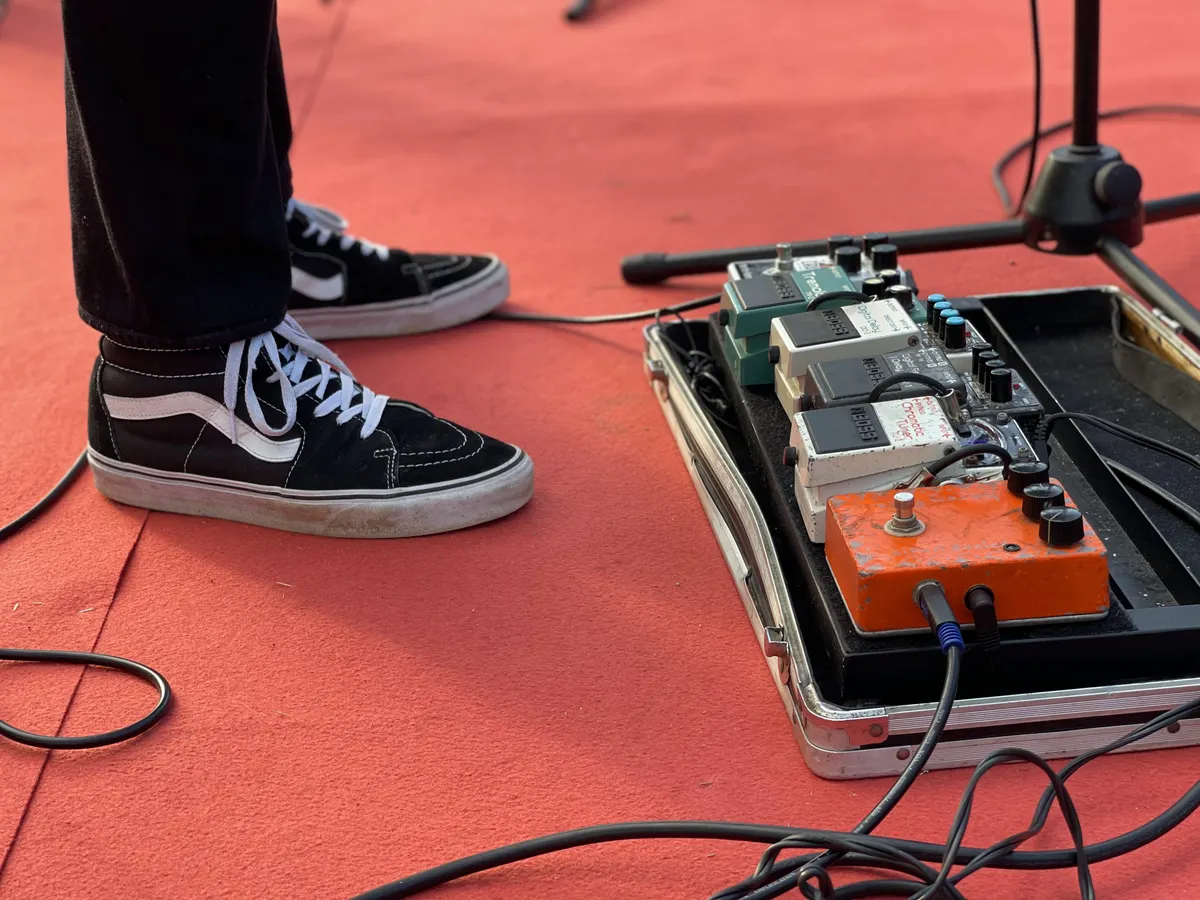
When The Jimi Hendrix Experience laid down Voodoo Child (Slight Return) in 1968, the wah-wah pedal was still a relatively new piece of kit, and Hendrix used it to devastating effect on one of rock’s most instantly recognisable introductions. The song is as much a statement about how a guitar can be played as it is about any particular riff or melody, and the story of how it came to exist is tangled up with a spontaneous jam session and two distinguished guests.
How Voodoo Child (Slight Return) grew out of a longer blues workout
The track has its roots in the longer, more freeform blues piece Voodoo Chile, also found on Electric Ladyland (1968), the third and final album recorded by The Jimi Hendrix Experience. According to Yahoo Entertainment, Hendrix conceived Voodoo Chile because he simply wanted to jam with Steve Winwood and Jefferson Airplane bassist Jack Casady. That extended, freeform session then became the foundation for a tighter, more focussed song, the ‘Slight Return’ of the title, built around several key additions, including the now-iconic wah-wah opening. Same DNA, entirely different energy.
Where Voodoo Chile sprawls freely, Voodoo Child (Slight Return) is coiled, purposeful. Hendrix alternates between rhythm and lead playing in the blink of an eye, and both riffs and solos pan from left to right, adding to the swaying, hypnotic quality of the whole thing. Noel Redding and Mitch Mitchell hold it together in the engine room, solid and unwavering, giving Hendrix the breathing space he needs to push the dynamics up and pull them back down again.
Engineer Eddie Kramer on capturing the room
The recording itself was as unconventional as the performance. Engineer Eddie Kramer has spoken about his approach in The Recording Engineer’s Handbook: ‘If you listen to Voodoo Child, you can hear the way the room just resonates. That’s because I had mics everywhere, and the fact that Jimi was singing live too! I wasn’t afraid of recording an artist in the room live as he was cutting. To me, anything that was in the room was fair game to be recorded. Don’t forget that I had an artist who was an absolute genius, so it made life a lot simpler.’
That willingness to let the room bleed into the recording is part of what makes the track feel so alive. There is a physicality to it that pure studio isolation could never have produced. Kramer’s approach and Hendrix’s performance fed off each other, and the result is a record that still sounds like it might come apart at any moment, but never does.
Voodoo Child (Slight Return) in the hands of others
Few songs have passed through as many different hands. Stevie Ray Vaughan reportedly used it to quell a bottle-throwing crowd at the Reading Festival in 1982. Yngwie Malmsteen, Mick Mars of Mötley Crüe, Tom Morello, Pearl Jam, Extreme, Earth, Wind & Fire, Neal Schon and Pride And Glory (featuring Hendrix devotee Zakk Wylde) have all taken a run at it. Joe Satriani has praised it as the very peak of guitar creativity.
In hip-hop, it has been sampled by Mos Def, the Beastie Boys, Ice-T, 2 Live Crew, Schoolly D and Del the Funky Homosapien, among others. The Fender Stratocaster that Hendrix played on it has become as mythologised as the song itself, less an instrument, more a vessel, as his devotees would have it.
The song was released as a single after Hendrix’s death in 1970, under the title Voodoo Chile, without the distinguishing ‘Slight Return’. It was backed with Hey Joe and his celebrated cover of Bob Dylan’s All Along The Watchtower, in a format that sat somewhere between a single and an EP.
Its last live outing was at the Love + Peace Festival on the Isle of Fehmarn, off the northern German coast in the Baltic Sea, the final show Hendrix ever played. The song’s closing lines, which turned out to be the last lines he would ever sing in public, were: ‘If I don’t see you no more in this world / I’ll meet you in the next one and don’t be late, don’t be late.’ As a final word, it is hard to top.
