


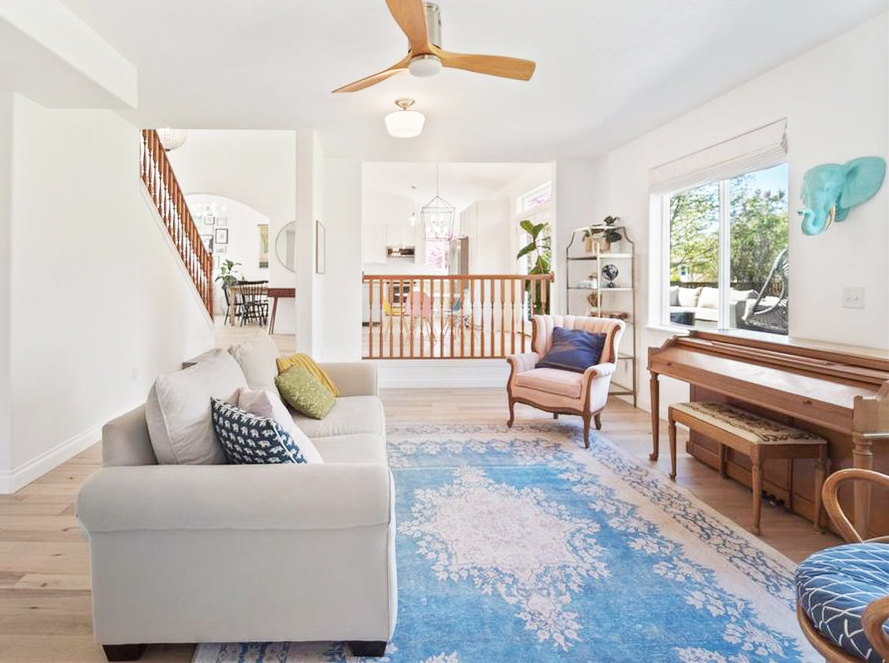
The most noticeable home transformations rarely come from demolition. They come from decisions made on a Saturday afternoon with a tape measure, a tester pot of paint, and a willingness to move the sofa even if it scrapes the floor a little. Across the UK, where housing stock ranges from narrow Victorian terraces to compact new-build flats, affordable interior refresh has quietly become its own craft. Not minimalism, not luxury — just thoughtful adjustment.
Paint remains the most powerful bargain tool. Not because it is cheap, though it often is, but because it changes how light behaves. A slightly warmer white can make a north-facing room feel intentional rather than gloomy. Deep colours — olive, charcoal, aubergine — can make small rooms feel grounded instead of cramped when used on a single wall or alcove. Many decorators now recommend painting just the lower half of a wall or a chimney breast to save cost and reduce risk. Tester pots, once used only for sampling, are now regularly used for small furniture projects — side tables, plant stands, old chairs rescued from relatives’ garages.
Furniture rearrangement is the refresh method people distrust until they try it. There is a stubborn belief that rooms have a “correct” layout determined on moving day. They don’t. Pulling seating away from walls, angling a chair toward a window, or turning a dining table ninety degrees can change circulation and mood. In smaller UK living rooms, floating the sofa slightly forward — even by 20 centimetres — often creates space for a narrow console shelf behind it, which then becomes storage plus display. No purchase required, just a bit of nerve.
Lighting is frequently overlooked because it feels technical and therefore expensive. It isn’t always. Swapping a cool bulb for a warm LED changes evening atmosphere immediately. Table lamps bought secondhand often outperform new budget ceiling lights because they add layered glow instead of overhead glare. Plug-in wall sconces have become popular precisely because renters can install them without rewiring. A room with three low light sources almost always feels more considered than one bright central fixture.
Textiles do quiet heavy lifting. Cushion covers cost less than cushions and fold flat in storage, which matters in smaller homes. Throws soften worn sofas and disguise colours you regret buying five years ago. Curtains hung higher than the window frame — closer to the ceiling — make rooms appear taller, even if the fabric itself is inexpensive. Ready-made panels from high street shops can be lengthened with iron-on hemming tape and a contrasting border strip, a trick borrowed from theatre sets.
Rugs are often treated as finishing touches, but they behave more like foundations. A too-small rug makes a room feel accidental. A larger budget rug, even if it means postponing other purchases, anchors furniture and reduces visual noise. Washable rugs have improved dramatically in recent years, which makes them practical for households with pets or children and removes the anxiety that once came with lighter colours.
Affordable home decor increasingly overlaps with secondhand culture. Charity shops, online marketplaces, and local auctions are no longer last resorts; they are style sources. Wooden frames, ceramic lamps, and solid cabinets built decades ago often outlast flat-pack equivalents. The trick is selective editing — buying fewer pieces with more material presence. Brass that has darkened slightly, glass with tiny bubbles, timber with visible grain — these details read as character rather than wear.
Hardware changes deliver disproportionate results. Kitchen cabinet handles, drawer pulls, and even door knobs can be swapped in an afternoon. Matte black, brushed brass, and simple oak cylinders are widely available at modest prices. The effect is subtle but cumulative. A dated kitchen with new handles and under-cabinet lighting often feels halfway renovated without touching a cabinet box.
Plants are frequently recommended and frequently mishandled. One large plant has more visual impact than six small ones scattered uncertainly. Floor plants — ficus, rubber plant, olive — structure corners and soften hard lines. If real plants fail repeatedly, high-quality faux versions now exist that do not scream plastic from across the room. The refresh comes from shape and scale as much as biology.
There is also the matter of visual clutter, which no purchase can fix. Shelves become storage by accident. Refreshing them costs nothing but time: remove everything, return only what earns its place. Books stacked horizontally create platforms for smaller objects. Negative space is not emptiness; it is emphasis. Editors understand this instinctively, but homeowners sometimes need permission.
I once realised halfway through moving a room around that what I actually wanted was less in it, not more.
Mirrors deserve more strategic use than hallways alone. Positioned opposite a window, they double daylight. Leaning a tall mirror against a wall — safely secured — adds height and informality compared with hanging it. Vintage mirrors often cost less than large new ones and carry slight imperfections that diffuse reflection in a flattering way.
Art does not need to be original or expensive to work. Oversized prints, exhibition posters, and even well-designed magazine pages can be framed effectively. The key is scale and framing, not pedigree. Gallery walls succeed when spacing is consistent, not when every piece matches. Mixing frame finishes — black, wood, metal — tends to look collected rather than purchased in one transaction.
Scent is part of interior perception but rarely budgeted. A room that smells clean and faintly botanical feels finished. Reed diffusers last longer than candles and require no ceremony. Simmering citrus peels and herbs on the stove before guests arrive is an old hospitality habit that deserves revival.
Temporary elements help hesitant decorators. Peel-and-stick wallpaper, removable tile stickers, and fabric wall hangings allow experimentation without long-term commitment. Many renters use them to define dining areas or headboard zones. The psychology matters: when change is reversible, people choose more boldly.
Refresh projects succeed when they are specific. Not “redo the living room,” but “change lighting and textiles.” Not “new decor,” but “better bedside setup.” Narrow goals produce visible wins, which encourage the next adjustment. Whole-room reinventions often stall under their own ambition.
Affordable interior refresh in the UK has become less about imitation and more about calibration — adjusting what is already there until it feels intentional. Rooms rarely need rescuing. They need editing, better light, and one or two brave decisions made without overthinking.
