


Most people don’t notice the furniture or the color when they walk into a room. Instead, they notice how the room makes them feel, even if they can’t put their finger on why. A small office can make you feel irritated all the time. Before you say anything, a room with a lot of light can help you relax. Interior design has always affected how people act, but its effects on mood and productivity are harder to ignore now that more work is done indoors and for longer periods of time than anyone planned.
The move to hybrid and remote work in the UK quietly made many people deal with places they had previously put up with. Tables for eating turned into desks. Unused rooms turned into meeting rooms. Corners that used to be full of junk suddenly became places to work for eight hours a day. People didn’t lose productivity because they weren’t disciplined; it was because the environment was against them. Chairs that looked fine for an hour became very uncomfortable by mid-afternoon. Screens that were too bright made my head hurt. The room itself seemed to fight back.
For a long time, psychologists have said that environments affect behavior. Abstract thinking can be helped by high ceilings, while lower ceilings can help with focus and detail. Circadian rhythms are stabilized by natural light, which has an effect on sleep quality and, by extension, decision-making. On the other hand, bad lighting can slowly take away energy and raise stress hormones. These aren’t big changes; they’re small ones that add up over time and change the course of a day.
People often say too much about color and don’t understand it, but it does play a small role. Cool colors can make your heart beat slower, while warm colors can make you more awake. In offices, bold color schemes can sometimes make people feel more awake, but they can also make them tired. When you add texture and contrast to neutral colors, they tend to look better over time. The most productive spaces don’t usually yell. They agree.
At one time, open-plan offices were marketed as democratic and collaborative, a way to show that hierarchies were less important. Over time, the emotional toll became clear. Noise, visual distractions, and a lack of privacy made it hard to focus. People adjusted by wearing headphones, which created invisible walls that went against the original purpose. Productivity didn’t stop completely, but it did break down into defensive routines.
The problem turned around at home. Boundaries got blurry when there was too much privacy. Work went on into the evenings. Laptops filled up bedrooms. The mind had a hard time turning off because the setting never changed. Psychology of interior design says that clear zoning, even if it’s just a symbol, can help control behavior. A desk that faces a wall shows that you are focused. A chair that is turned toward a window suggests that you should stop. When routines aren’t stable, these cues are more important.
Choosing furniture is more than just about comfort; it also has emotional weight. A sturdy desk can make you feel like you have authority and stability, while a flimsy setup can make you feel less sure of yourself in small ways. People don’t want to admit it, but storage affects mood more than they think. When there is visible clutter, the brain has to deal with more information that isn’t important. Hidden storage makes things easier, which lets you focus without trying.
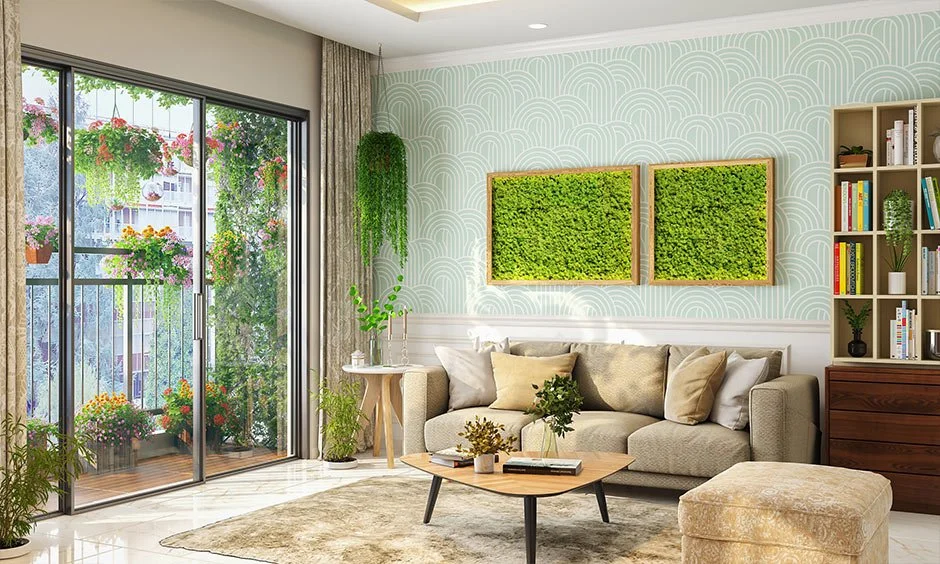
During lockdowns, plants became a small obsession, not because they made people more productive right away, but because they made spaces feel softer. Biophilic design, which may sound like a big word, is based on a simple idea: people like natural shapes. Even fake plants can help you feel less stressed, but the effect is stronger when the leaves are real and the light is natural.
People often forget about sound when they talk about design. Soft furnishings soak up sound, while hard surfaces make it louder. Even a quiet room can feel uneasy when there are echoes. Constant low-level noise in the workplace makes people more tired, even when they don’t notice it. Silence can also be oppressive if it feels like someone is watching you. The balance is very sensitive and depends on the situation.
I remember reading a study that said workers who sat near windows were happier at work. That afternoon, I noticed that I had instinctively moved my desk closer to the light.
People often think of productivity as how much work you get done, but design affects the inputs, like mood, clarity, and patience. A space that isn’t well designed makes you have to constantly control yourself. A well-designed one makes it less necessary. This difference is why some people do well in simple places and others do poorly in fancy offices. It’s not about being rich. It’s all about alignment.
In creative fields, chaos is sometimes seen as a sign of genius. In reality, most professionals switch between mess and order depending on what they need to do. Design that allows for flexibility, such as movable furniture, adjustable lighting, and modular storage, tends to support this rhythm. Static spaces only allow for one way of working, which doesn’t work for most of the day.
UK homes, which are usually smaller than homes in other countries, have their own set of problems. When it comes to interior design here, you need to negotiate instead of expand. Vertical storage, multifunctional furniture, and well-planned lighting do more for mood than cosmetic changes. When the space works together instead of against each other, productivity goes up.
There is also a social aspect. Shared spaces convey values. An office that is not taken care of looks like it can be thrown away. A well-thought-out one shows that you care and expect something. Even if they don’t talk about them, employees can quickly read these signs. The signals at home come from inside. A planned workspace makes people feel like the work they do there is important.
Trends come and go quickly, but their effects on people’s minds last. Too much minimalism can make things feel empty. Maximalism can be too much. The best interiors take ideas from other places and use them to make functional choices. The goal is not to be inspired by a show, but to be steady.
Mood changes, and productivity doesn’t always go in a straight line. Interior design doesn’t control either one, but it does shape the conditions under which both change. A chair can be annoying. A window can help you relax. A room can either help or slowly ruin the day. These are small forces, but they add up over time and change weeks, habits, and eventually, results.
The best sign of good design is how little it makes you pay attention. People stop thinking about a space and get on with what they came to do when it works.
