


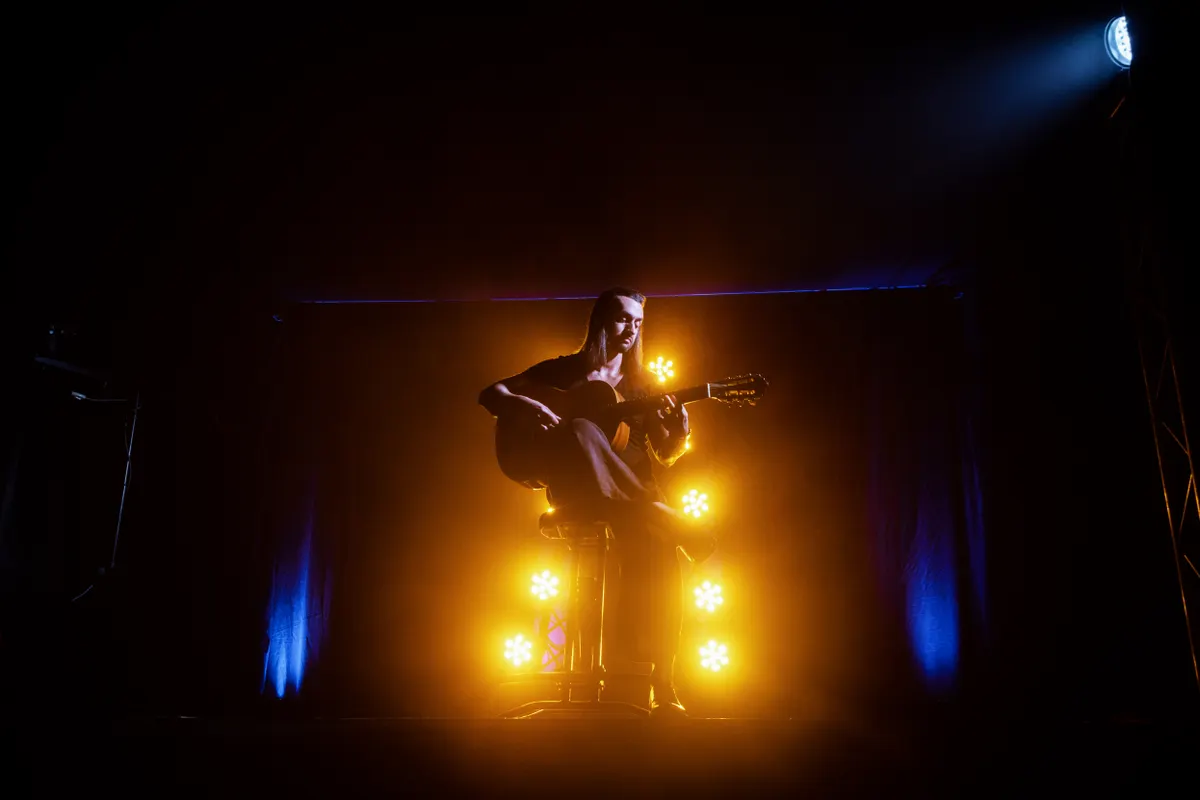
On 7 June 2013, Kings of Chaos Cape Town was the place every rock fan on the planet should have been standing: a 7,000-capacity casino complex in the northern suburbs of Cape Town, packed to the rafters with people watching four members of Guns N’ Roses, Joe Elliott, Glenn Hughes, Myles Kennedy and a rotating cast of platinum-selling musicians share the same stage for the first time. Between them, the nine members of Kings of Chaos had sold upwards of 200 million records. Depending on your tolerance for this sort of thing, that made them either the most high-profile covers band on the planet or the world’s first billion-dollar supergroup.
From Rock ‘n Roll All-Stars to Kings of Chaos Cape Town
The project did not begin as smoothly as its name might suggest. According to Dead Curious, the band was started in 2012 by Matt Sorum under the name Rock ‘n Roll All-Stars, and that first outing, a short South American tour with Gene Simmons, Sebastian Bach and Cult guitarist Billy Duffy in tow, was an unvarnished disaster. They were scheduled to play 10 shows. They ended up playing four. The promoter had not sorted out the local promoters properly, the money was not going to materialise, and if the money was not coming, the band was not playing. Joe Elliott called it ‘classic’ in the worst possible sense: ‘We were on an old 70s aeroplane with a 70s promoter who did all the things that 70s promoters do.’
By the time they regrouped under the Kings of Chaos name, Sorum had learned his lessons. The man who brought them to South Africa, promoter Andy MacPherson, was the anti-70s-promoter in every conceivable way. He organised the A-list treatment from start to finish, including a day off at the top of Table Mountain and lunch at a five-star beach lodge accessible only by a terrifying mountainside road several hundred feet above the ocean. Nobody fell off. Just.
The name Kings of Chaos had been kicking around Sorum’s brain for at least 15 years. He originally wanted to use it for the supergroup he formed in the mid-90s with McKagan, Sex Pistols guitarist Steve Jones and Duran Duran bassist John Taylor, but that outfit went with Neurotic Boy Outsiders instead. Second time around, the name stuck.
The lineup, the logistics and the Keith Richards problem
Getting nine musicians of this calibre into the same room in Cape Town (a flight from London runs to 11 hours, the trek from Los Angeles closer to 30) was, by the admission of co-manager Steve Wood, a genuine nightmare. ‘It would be easy if none of these people did anything,’ Wood said, ‘but they’ve all got at least one band, some of them have two or three.’ Wood co-manages Alter Bridge, and the band’s own Myles Kennedy was juggling live commitments and a new album when the call came. Kennedy replaced Sebastian Bach, who had bailed to make a reality TV show.
Sorum’s approach to recruitment was refreshingly unsentimental. ‘I’ve got a pretty good sense of who is an asshole and who isn’t,’ he said. ‘The deal was: no drama, no bullshit, no arguments, no egos. Just come and play.’ He called in Joe Elliott (who had known GN’R properly since the Freddie Mercury tribute concert in 1991) Glenn Hughes at his own request (Sorum is a bigger Deep Purple fan than Zeppelin or Sabbath, he says), and reached further up the food chain from there.
Not every call landed. Sorum wanted Jimmy Page. He also called Keith Richards. ‘I said: “How about coming along and just jamming?”‘ Richards’ manager’s response was immaculate: ‘Keith has already got a band. They’re called the Rolling Stones.’ Short of Mick Jagger himself shutting the door, you could not get a cleaner knockback than that.
The backstage atmosphere in Cape Town was closer to a sober retreat than the chaos the name implied. At least a third of the musicians are recovering alcoholics or addicts, which goes some way to explaining why the dressing-room conversation turned on cucumber and celery smoothies rather than anything stronger. What there was in abundance was camaraderie. Slash and McKagan sat around playing an acoustic Knockin’ On Heaven’s Door in the green room. Two doors down, Elliott was guiding Hughes through the harmonic nuances of Def Leppard’s Animal. Myles Kennedy was exiled to another floor of the building and appeared fine with it.
The show at GrandWest Arena itself was split into three sections: a greatest-hits electric opening, a six-song acoustic stretch complete with sofas and a standard lamp wheeled on stage, and a final section where they rolled out the really heavy artillery. Guns N’ Roses got four songs, or five if you count the Gilby Clarke-fronted Knockin’ On Heaven’s Door. Deep Purple got three, Def Leppard three, Collective Soul three, Velvet Revolver two. Covers (Communication Breakdown, Tie Your Mother Down, All The Young Dudes) filled the gaps.
The moment that stopped everyone cold came during the acoustic section. Glenn Hughes stepped up to sing Mistreated, a slow-burning Deep Purple ballad that a fair number of the Cape Town crowd did not know coming in. Six or seven minutes later, every musician on that stage was on their feet applauding. Hughes himself was direct about the dynamic: ‘I’m a 100 per cent competitive person off stage. But up on that stage there’s zero competition.’
Elliott’s verdict on why they took the show to South Africa rather than London or New York was equally direct: ‘The critics would maul us in the UK. They’d just go “Why?” When you take it to places that are more musically starved, they get it.’ MacPherson, the Cape Town promoter, put it the other way around: if the band went back and told other musicians they had a great time in South Africa, more bands would follow. For a country that sees fewer international touring acts than almost anywhere on the circuit, that matters more than any review.
Sorum was already drawing up a wish list for future editions: Chester Bennington, Corey Taylor, Steven Tyler (the name everyone dropped without prompting) and, in a separate Duff McKagan fantasy involving Iggy Pop and former Damned guitarist Brian James, a Punk Rock Kings of Chaos running in parallel. ‘The more we do it, the more it’ll fall into place,’ said Elliott. The Keith Richards slot, for what it’s worth, remains open.
