


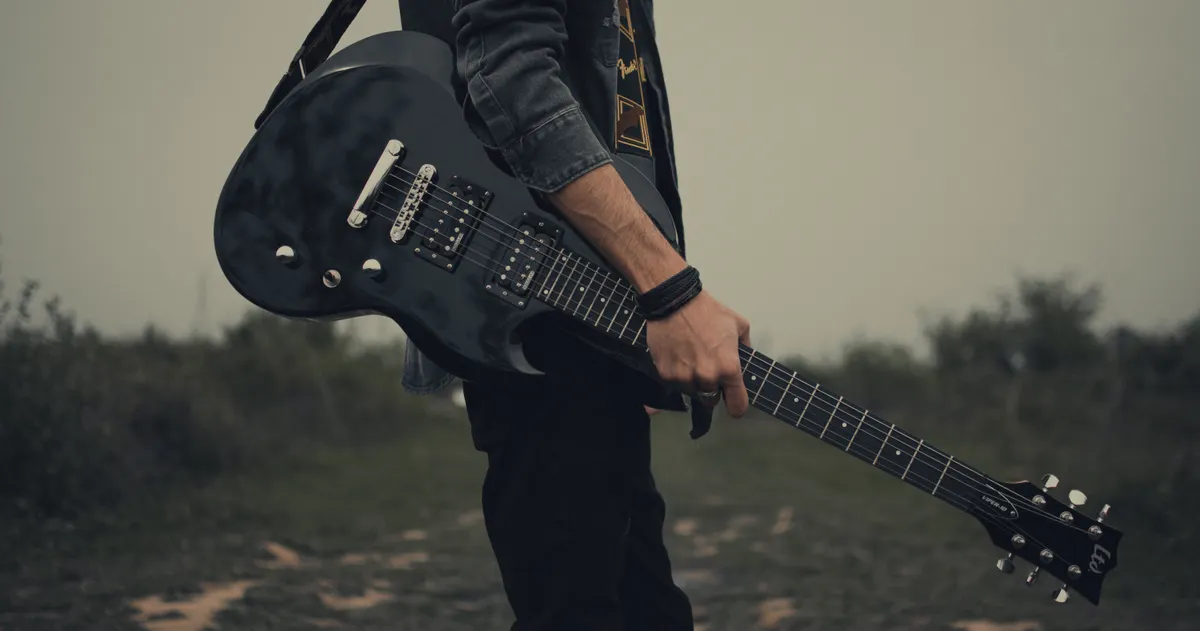
The Quadrophenia Newcastle breakdown of Bonfire Night 1973 remains one of rock’s most visceral meltdowns: Pete Townshend strangling his own soundman, smashing a Gibson Les Paul, clawing pre-recorded tapes from the mixing board, and finally stalking off stage at the Odeon Cinema mid-set. The Who had been 50 minutes into a three-night stand, promoting the most ambitious thing Townshend had ever written, and it was all going spectacularly wrong.
The backing tapes kept misfiring. Audiences couldn’t follow the concept without Townshend and Roger Daltrey stopping between songs to narrate the plot. Then, during 5:15, the tape sync dropped out entirely. It kicked back in 15 seconds late. That was enough. Townshend grabbed soundman Bob Pridden by the neck, hauled him over the mixing desk and proceeded to gut the sound equipment with his bare hands.
The band crept offstage after him. The curtain came down. Twenty minutes later they returned, ditched the Quadrophenia material entirely, and tore through old hits instead. Townshend berated the crowd for failing to understand his new work, then demolished another guitar. Keith Moon reduced his kit to splinters. Daltrey put his boot through a microphone. The Newcastle Evening Chronicle called it ‘a ridiculous display of unwarranted violence’ and ‘an extremely childish publicity stunt’. Moon’s response the following morning, on local TV show Look North: ‘Well, nobody asked for their money back, did they?’
The Quadrophenia Newcastle breakdown in context: grand ambition, fraying nerves
Quadrophenia had been conceived as Townshend’s defining statement of the 70s, a rock opera to make Tommy look modest. ‘If Tommy is rock opera, Quadrophenia is grand rock opera,’ says Who biographer Richard Barnes, who Townshend describes as a lifelong associate. ‘If Tommy is tabloid, Quadrophenia is broadsheet. I think Pete moved The Who to another level with that record.’
The pressure behind it was immense. Townshend had been nursing the project since the summer of 1972, partly out of anxiety about the band’s direction. ‘I was worried about the band at the time,’ he told Classic Rock. ‘We were all bored with playing Tommy, and only played three songs from Who’s Next on stage. I wanted a Tommy replacement for our stage act.’ He also wanted to address the growing distance between The Who and the fans who’d built them. Moon, he noted candidly, ‘was behaving like a Saudi Prince’.
Recording began in early 1973, initially decamped to the mobile studio of Ronnie Lane, who was then on the verge of leaving the Faces, while The Who’s own Battersea facility was still being converted. John Entwistle threw himself into the sessions, writing out brass parts ‘on music manuscript paper like a proper composer,’ according to Townshend, and delivering the pumping horn salvos on 5:15, the orchestral flourishes on the title track, and the eruption that closes Love Reign O’er Me. Daltrey, meanwhile, ‘sang like a raging bear,’ in Townshend’s words. ‘His Love Reign O’er Me will never be surpassed.’
The surging, semi-orchestral sound that resulted is, as Barnes puts it, ‘like porcelain and reinforced concrete side by side’, big, hard rock guitars alongside strings, synthesisers and Wagnerian horn lines. ‘At the time, Pete and I were writing to each other and I used to call him Tannhäuser because of Quadrophenia,’ Barnes says.
Fistfights, oil embargoes and a belated triumph
Before the tour even started, the Daltrey-Townshend tensions exploded at Shepperton Studios rehearsals. Townshend arrived four hours late. Words were exchanged. Townshend threw punches and caught Daltrey with his guitar. Daltrey responded with a single uppercut and knocked him cold. ‘Roger punched me once,’ Townshend recalls, ‘and I’m sure I asked for it. And he could have killed me, he had a hell of a punch. Luckily I just lost my memory for an hour or two. He was very sweet afterwards.’
Then came the OPEC oil embargo. The vinyl shortage it caused meant only a limited number of pressings reached UK shops before production had to halt, leaving many fans waiting until the tour’s end in November to buy a copy. The album still climbed to No.2 in the UK. In the United States, according to the Pete Townshend Official Site, Quadrophenia was released by MCA Records in late October 1973, going platinum within 48 hours, held off the top only by Elton John’s Goodbye Yellow Brick Road. The UK release on Track Records followed on 2 November 1973.
Critical reaction was mixed. Writing in Rolling Stone, Lenny Kaye praised it as ‘a beautifully performed and magnificently recorded essay of a British youth mentality’ but concluded it ‘falls short of the mark’. NME called it a triumph, ‘by no means unflawed’, but suspected it could be ‘the most rewarding musical experience of the year’ for listeners who stuck with it. Barnes, with characteristic bluntness, called it ‘worthy. Everyone had it in their collection, but didn’t play it much.’
The rehabilitation came in the summer of 1996, when a newly remixed and remastered version prompted a full live staging in Hyde Park, Phil Daniels, David Gilmour, Stephen Fry, Trevor McDonald and others in attendance, and an extensive US and UK tour. A five-disc box set, Quadrophenia: The Director’s Cut, followed in 2011, and another tour came in 2012 and 2013. Townshend now: ‘Since then, nothing can dampen my enthusiasm for it, or my gratitude that we at least got a great album made. We had a great team.’
