


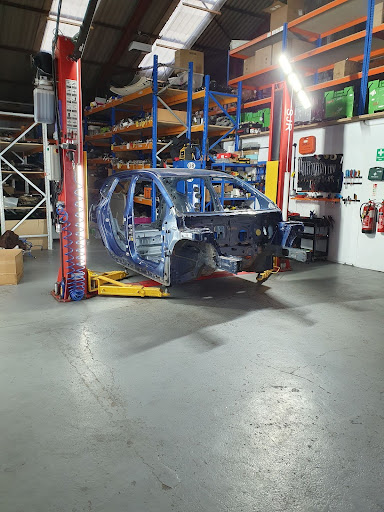
The UK automotive aftermarket is going through a quiet but significant shift. As car prices remain high and repair decisions become more financially driven, more drivers are choosing to maintain their existing vehicles rather than replace them. Nowhere is this trend more visible than in the premium segment, where demand for authentic BMW parts continues to rise year on year.
Industry data from UK aftermarket analysts shows that spending on vehicle repairs and replacement components has grown steadily since 2022, with premium brands accounting for a disproportionate share of that increase. BMW models, in particular, feature among the most repaired vehicles outside the dealer network, largely because owners are keen to keep them running properly without absorbing main-dealer pricing at every turn.
Against this backdrop, specialist suppliers are adapting quickly. And stock availability has become one of the most critical factors in the market.
Demand is no longer seasonal — it’s constant
Historically, demand for replacement parts followed predictable patterns. Winter brought suspension and braking work, while summer focused on servicing and cooling systems. That rhythm has largely disappeared.
Recent supply-chain data suggests that parts demand is now consistent throughout the year, driven by higher mileage usage, longer ownership cycles, and more complex vehicle systems that require precise replacements rather than simple repairs. Independent garages report that delays in sourcing the correct component are now one of the main causes of extended repair times.
This has pushed specialist suppliers to rethink how they manage inventory, not just in terms of volume, but relevance.
Why BMW owners still prioritise genuine BMW parts
Despite rising costs, BMW owners have not abandoned quality. Research from independent UK repair networks indicates that customers driving premium brands are significantly more likely to request genuine BMW spares or original OEM equivalents, even when buying used.
The reason is straightforward. Authentic components are designed to work seamlessly with the vehicle’s electronics, software, and mechanical tolerances. For modern BMWs, this matters more than ever. Headlights, control modules, gearboxes, and even interior systems are now deeply integrated, making compatibility critical.
As a result, demand for authentic BMW parts has remained strong, particularly in the used market, where cost savings can be achieved without compromising fit or function.
Stock depth is becoming a competitive advantage
In today’s market, having parts available is no longer enough. Suppliers need depth, multiple variants, engine codes, trims, and generations to meet real-world repair needs.
That reality explains why MT Auto Parts has continued to expand its BMW parts stock in response to demand. Rather than relying on a narrow range of fast-moving items, the focus is on holding a broad selection of BMW spares that reflect how vehicles are actually configured on UK roads.
This includes not just major components such as engines and gearboxes, but also body panels, interior assemblies, electronics, and drivetrain parts that are increasingly difficult to source quickly through traditional channels.
Independent garages are driving much of the growth
While private owners play a role, independent garages are a major force behind the growing demand for BMW spares. As more workshops move away from dealer-only sourcing, they are seeking suppliers that can provide accurate identification, consistent availability, and realistic delivery times.
Recent workshop surveys show that garages now prioritise parts availability and accuracy over brand loyalty when choosing suppliers. A wrong part costs more than a slightly higher purchase price, in labour, time, and customer confidence.
Suppliers that can support this shift with reliable stock levels are becoming embedded in the repair ecosystem.
Online sourcing is reshaping expectations
Another clear driver of demand is the growth of online parts sourcing. Consumers are increasingly comfortable researching and buying BMW parts digitally, provided listings are clear and detailed. Transparency around condition, part numbers, and compatibility has become just as important as price.
This change has widened the market for BMW spares beyond local boundaries, turning stock availability into a national consideration rather than a regional one. Suppliers able to support this scale are better positioned to keep up with demand.
A market that continues to evolve
Looking ahead, analysts expect demand for used and OEM BMW components to remain strong. New car prices show little sign of falling, and repair costs are forecast to stay elevated as automobiles become more technologically complex.
For BMW owners, this reinforces a practical approach to ownership — maintaining vehicles carefully, sourcing the right parts, and avoiding unnecessary replacements. For suppliers, it means continued investment in stock, systems, and expertise.
As demand continues to grow, suppliers that adapt early, by expanding stock intelligently and focusing on relevance rather than volume alone, are likely to remain central to this evolving landscape.
