


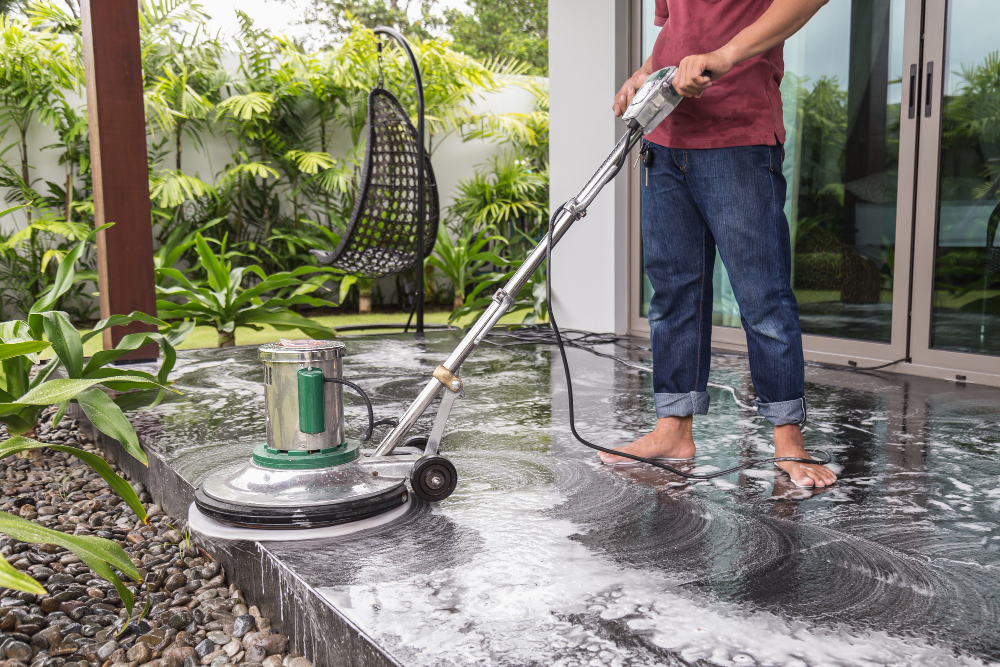
The first thing most people remember about cleaning an outdoor space is the noise. A power washer starting up on a quiet Saturday morning has a particular rasp to it, half promise and half threat, and it signals a decision that can’t easily be undone. Once water is blasting concrete or stone, the surface will change, sometimes dramatically, and not always for the better. Choosing the right cleaning tools is less about horsepower and more about understanding what you are actually standing on.
British outdoor spaces are deceptive. Patios look solid until you notice the mortar softening under your feet, and timber decking feels sturdy right up to the point where a jet of water lifts the grain like wet cardboard. The best outdoor cleaning tools in the UK tend to respect this fragility. They assume moisture, shade, and organic growth as the norm rather than the exception, and they work with those conditions instead of trying to overwhelm them.
The power washer remains the most talked-about option, partly because it delivers visible results fast. I’ve seen neighbours spend an entire afternoon transforming blackened slabs into something pale and almost new, pausing only to admire the sharp contrast line where clean meets dirty. But power washers vary wildly, and the difference between a domestic electric unit and a petrol-driven machine is not just volume. Pressure ratings matter, but so does water flow, nozzle design, and how easy it is to dial the pressure down rather than up.
Lower-pressure washers paired with wider fan nozzles are often kinder to patios than brute-force machines. Stone flags, especially older ones, can spall under excessive pressure, leaving a roughened surface that traps dirt more eagerly next time. Concrete can survive more punishment, but even there, blasting too close for too long etches patterns that look accidental and permanent. The best outdoor cleaning tools are often those that slow you down slightly, forcing a more deliberate pace.
Patio cleaner attachments don’t get the same attention as the washer itself, but they probably should. These flat, disc-shaped heads with rotating arms keep water contained and evenly distributed, reducing streaks and splashing. They also protect joints and edges, which are usually the first casualties of careless cleaning. I once watched someone strip the sand from between newly laid slabs in under ten minutes, a small tragedy that didn’t reveal itself until weeds returned weeks later.
Manual tools still have a place, even if they feel unfashionable. A stiff-bristled brush and a bucket can be surprisingly effective on algae when used regularly, and they offer a kind of tactile feedback machines can’t. You feel resistance change, notice the smell of wet stone, and adjust pressure instinctively. There’s also less risk of discovering, too late, that you’ve removed more than just dirt.
Decking complicates things further. Softwoods common in UK gardens absorb water readily, and aggressive cleaning raises fibres that splinter once dry. The best approach usually combines a low-pressure washer, a specialist decking cleaner, and patience. Chemical cleaners get a bad reputation, but many modern formulations are designed to loosen biological growth without stripping protective treatments. The key is dwell time, something rushed weekend projects rarely allow.
Garden furniture tells its own story about tool choice. Metal frames tolerate pressure washing well enough, though paint and powder coatings can flake if already compromised. Plastic benefits from gentle washing rather than scouring, while hardwood furniture responds better to brushing along the grain than being blasted across it. Each material asks to be handled differently, and the tools should answer that request rather than ignore it.
At one point, reading manufacturer warnings about maximum pressure and minimum distances, I caught myself thinking how casually most of us ignore instructions until damage teaches the lesson instead.
Storage and ergonomics matter more than people admit. Heavy machines that are awkward to manoeuvre tend to be used less often, leading to more aggressive cleaning sessions when they do come out. Lightweight tools with long hoses and sensible cable management encourage frequent, lighter cleaning, which is usually better for surfaces. It’s a small behavioural detail with long-term consequences.
Weather shapes decisions too. UK cleaning seasons are narrow, often squeezed between frost risk and persistent rain. Tools that can be set up quickly and used in short windows make sense here. Waiting for a perfect dry spell to justify a complex setup usually means the job keeps getting postponed, while moss quietly reclaims territory.
There’s also the question of noise and neighbours, an unspoken factor in many suburban choices. Electric power washers are quieter and less intrusive, which matters when gardens back onto each other closely. A tool that creates tension across a fence line is rarely the right one, no matter how effective it looks in marketing photos.
Choosing the best outdoor cleaning tools in the UK ultimately means accepting that no single device does everything well. A modest power washer, a patio cleaner attachment, a couple of solid brushes, and surface-appropriate cleaners form a more resilient toolkit than one oversized machine. It’s an approach built on observation rather than impatience.
Over time, you start to notice patterns. Surfaces cleaned gently last longer. Areas maintained little and often never reach the point of desperation. Tools chosen with restraint tend to earn quiet loyalty. Outdoor spaces respond to care in ways that feel almost personal, and the right tools make that relationship easier rather than more adversarial.
The satisfaction comes not from the dramatic before-and-after photographs, but from the steadier knowledge that next spring’s work will be lighter, quicker, and less fraught. That, more than raw cleaning power, is what the best outdoor cleaning tools quietly deliver
